Physical Address
304 North Cardinal St.
Dorchester Center, MA 02124
Physical Address
304 North Cardinal St.
Dorchester Center, MA 02124

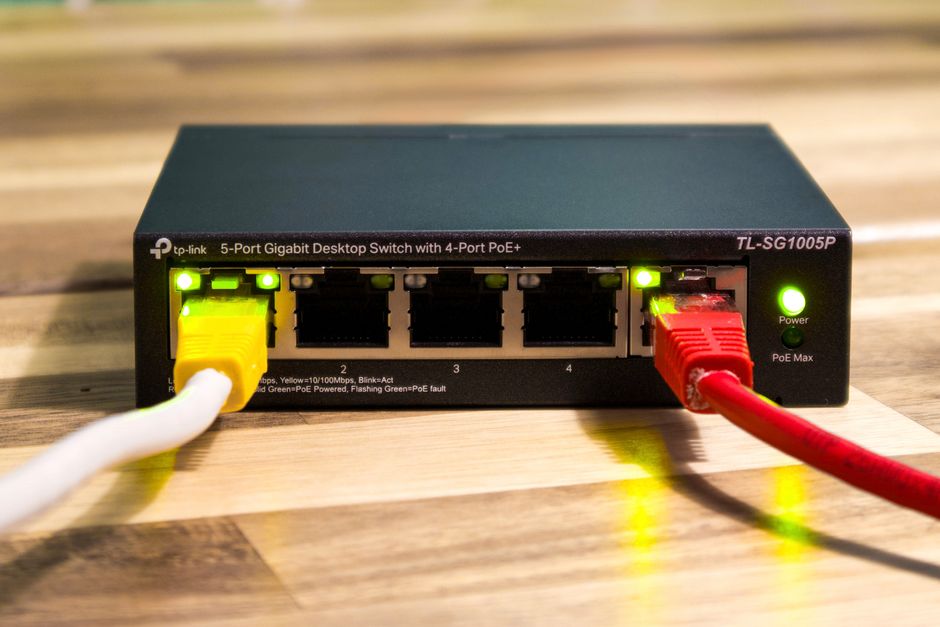
We compare TP-Link Deco BE63, Netgear Orbi 770, and Eero Max 7 in 2026. Find out which Wi-Fi 7 mesh system offers the best speed, ports, and value.
As we navigate through 2026, Wi-Fi 7 has officially transitioned from an early-adopter luxury to the standard baseline for high-performance home networking. Multi-gigabit fiber internet plans are more common than ever, and our homes are packed with bandwidth-heavy smart devices, 8K streaming setups, and virtual reality gear. To keep up with these modern demands, legacy Wi-Fi 5 and Wi-Fi 6 systems are being retired in favor of next-generation mesh networks. These newer systems leverage the wider 320 MHz channels, multi-link operation (MLO), and advanced QAM configurations that define the Wi-Fi 7 standard.
Choosing the right mesh system can be a daunting task, especially when major brands offer vastly different hardware configurations and pricing models. Today, we are looking at three of the most popular Wi-Fi 7 mesh options on the market: the budget-friendly but high-performing TP-Link Deco BE63, the premium mid-tier Netgear Orbi 770, and the ultra-premium Amazon Eero Max 7. Each of these systems targets a different type of user, varying significantly in terms of port speeds, smart home integration, and subscription costs. In this comprehensive comparison, we will break down their specifications, pricing, and performance to help you decide which system is the best fit for your home in 2026.
Before diving into the detailed breakdown of each mesh system, let’s take a look at their key specifications and current pricing at a glance:
| Specification / Feature | TP-Link Deco BE63 | Netgear Orbi 770 | Amazon Eero Max 7 |
|---|---|---|---|
| Wi-Fi 7 Class | BE10000 (Tri-Band) | BE11000 (Tri-Band) | BE20800 (Tri-Band) |
| MSRP (3-Pack) | ~$399.99 (Street Price) | ~$999.99 | ~$1,699.99 (often on sale for ~$1,184.99) |
| Max Theoretical Wireless Speed | Up to 10 Gbps | Up to 11 Gbps | Up to 4.3 Gbps (wireless throughput limit) |
| Ethernet Ports (Per Node) | 4 x 2.5 Gbps (all nodes) | Router: 4 x 2.5 Gbps Satellite: 2 x 2.5 Gbps |
2 x 10 Gbps + 2 x 2.5 Gbps (all nodes) |
| USB Ports (Per Node) | 1 x USB 3.0 | None | None |
| Coverage Area (3-Pack) | Up to 5,800 sq. ft. | Up to 8,000 sq. ft. | Up to 7,500 sq. ft. |
| Smart Home Integration | Basic (Alexa/Google Home compatible) | Basic (Alexa/Google Home compatible) | Advanced (Zigbee, Matter, Thread border router) |
| Premium Subscription Fee | HomeShield ($2.99/mo or $17.99/yr) | Netgear Armor ($99.99/yr) | Eero Plus ($9.99/mo or $99.99/yr) |
The TP-Link Deco BE63 (also known in some regions as the Deco 7 Pro BE10000) is the undisputed value champion of the Wi-Fi 7 era. Historically, upgrading to the latest wireless standard meant spending close to a thousand dollars, but TP-Link has shattered that barrier. Priced at a highly competitive street price of approximately $399.99 for a 3-pack, the Deco BE63 delivers true Wi-Fi 7 features without requiring you to empty your bank account.
Under the hood, each Deco BE63 node is equipped with a 1.5 GHz quad-core processor, 1 GB of RAM, and 128 MB of flash storage. It operates as a tri-band system, splitting its 10 Gbps theoretical capacity across the 6 GHz (5,760 Mbps), 5 GHz (4,320 Mbps), and 2.4 GHz (574 Mbps) bands. In real-world performance, this allows for incredibly snappy local transfers, especially when devices utilize the wide 320 MHz channels on the pristine 6 GHz frequency.
One of the most impressive hardware achievements of the Deco BE63 is its physical port selection. Every single node in the system features four 2.5 Gbps Ethernet WAN/LAN auto-sensing ports. This makes the Deco BE63 a dream come true for anyone running a wired backhaul throughout their home, as you can connect switches, NAS units, and desktop PCs directly to any node without a speed bottleneck. Furthermore, TP-Link has included a USB 3.0 port on each node, a rarity in modern mesh routers, allowing you to easily set up basic network-attached storage or media sharing.
On the software side, the Deco app makes setup exceptionally simple. TP-Link offers its HomeShield suite for security and parental controls. While the basic version is free, unlocking advanced features like IoT protection and comprehensive web filtering requires a highly reasonable subscription fee of $2.99/month or $17.99/year—the cheapest subscription tier among all three competitors in this comparison.
Netgear’s Orbi brand has long been synonymous with ultra-premium mesh systems and unmatched wireless range. The Netgear Orbi 770 Series (RBE773 for the 3-pack) acts as a more affordable bridge between their entry-level options and the ridiculously expensive Orbi 970 series. Sitting at a standard retail price of $999.99 for a 3-pack, it is far from cheap, but it remains a highly robust, high-performance option.
The Orbi 770 features an elegant, tall tower design that is engineered to optimize signal propagation throughout multi-story homes. Powered by a quad-core 1.5 GHz processor, 2 GB of RAM, and 4 GB of flash memory, it easily handles high-density environments with up to 100+ connected devices. Its BE11000 rating allocates bandwidth to the 6 GHz (5,760 Mbps), 5 GHz (4,320 Mbps), and 2.4 GHz (688 Mbps) bands. This hardware allows a 3-pack to cover a massive 8,000 square feet, outclassing both the Deco and Eero in raw wireless coverage distance.
Where the Orbi 770 stumbles slightly is in its port configuration. The main router unit is well-equipped with one 2.5 Gbps WAN port and three 2.5 Gbps LAN ports. However, the satellite nodes are limited to only two 2.5 Gbps LAN ports each. If you intend to run a wired backhaul to a satellite while also connecting a gaming console and a smart TV directly via Ethernet, you will be forced to buy an external network switch. There are also no USB ports present on any of the Orbi 770 units.
Netgear’s software ecosystem is highly stable, but it relies heavily on paid upgrades. Network security is handled by Netgear Armor (powered by Bitdefender), which is highly effective at blocking threats but costs a hefty $99.99/year after the initial trial. Additionally, the configuration options inside the app are surprisingly limited for a system at this price point, meaning advanced networking enthusiasts might feel restricted by the lack of granular Wi-Fi settings.
If money is no object and you want the absolute peak of consumer mesh hardware, the Amazon Eero Max 7 is your destination. Officially retailing for $1,699.99 for a 3-pack (though frequently discounted to around $1,184.99 on Amazon in 2026), the Eero Max 7 is a luxury product designed for power users with ultra-fast multi-gigabit fiber connections.
The Eero Max 7 is a physical departure from the tiny, puck-like nodes of older Eero models. Each node is a substantial, heavy tower designed to passively cool the incredibly powerful hardware inside without relying on noisy internal fans. It features an enterprise-grade ARM Cortex-A73 quad-core processor, 2 GB of RAM, and 4 GB of flash storage. With a theoretical wireless speed class of BE20800, it is built to deliver real-world wireless throughput of up to 4.3 Gbps and wired speeds of up to 9.4 Gbps.
Port selection is where the Eero Max 7 completely justifies its premium price tag. Every single node features two 10 Gbps Ethernet ports and two 2.5 Gbps Ethernet ports. This means you can run a 10 Gbps wired backhaul throughout your home, ensuring that you lose absolutely zero speed as data travels from node to node. This is the only system in our comparison capable of supporting 10 Gbps internet plans seamlessly across every wired and wireless connection.
Additionally, the Eero Max 7 serves as an advanced, centralized smart home hub. It has native support for Zigbee, Matter, and acts as a Thread border router. This allows you to connect and control smart home devices directly through Alexa without needing extra hubs cluttering your shelves. Unfortunately, Eero continues to lock basic features like detailed parental controls, ad blocking, and historic data usage behind its Eero Plus subscription, which costs $9.99/month or $99.99/year.
Deciding between the TP-Link Deco BE63, Netgear Orbi 770, and Eero Max 7 depends heavily on your budget, your physical home layout, and your existing network infrastructure.
If you have a home pre-wired with Ethernet cables, the TP-Link Deco BE63 and the Eero Max 7 are the clear favorites. The Deco BE63 offers four 2.5 Gbps ports on every node, allowing you to build an incredibly fast 2.5G wired network on a budget. If you have a 5 Gbps or 10 Gbps fiber line, the Eero Max 7 is the logical choice due to its dual 10 Gbps ports per node. Conversely, if you must rely on a wireless backhaul (where the nodes talk to each other over the air), the Netgear Orbi 770 excels due to Netgear’s proprietary antenna layouts and superior signal propagation over long distances.
For smart homes or home offices with lots of hardwired equipment (like NAS devices, desktop PCs, and gaming consoles), port density matters. The Deco BE63 gives you 12 total 2.5 Gbps ports across a 3-pack. The Eero Max 7 gives you 6 total 10 Gbps ports and 6 total 2.5 Gbps ports. The Netgear Orbi 770 is the weakest in this category, offering only 2 ports on its satellite nodes, limiting your ability to expand wired connections without adding extra switches.
When calculating the total cost of ownership in 2026, do not forget the subscription fees. TP-Link is by far the most consumer-friendly, offering excellent basic parental controls for free, and charging a very low fee ($17.99/year) if you choose to upgrade. Netgear and Eero are significantly more aggressive with their subscription models, both charging $99.99/year to unlock premium security and networking features. If you refuse to pay ongoing monthly fees for your router, the Deco BE63 is your best bet.
If you are heavily invested in the Amazon Alexa ecosystem or want to build a modern smart home without buying separate bridges, the Eero Max 7 is unrivaled. Its built-in support for Zigbee, Matter, and Thread allows it to act as the primary controller for all your smart lighting, locks, and sensors. The Deco BE63 and Orbi 770 can communicate with smart assistants, but they do not act as localized smart home controllers.
No, you do not. While you will need Wi-Fi 7 compatible client devices (like newer smartphones and laptops) to reach maximum wireless speeds, legacy Wi-Fi 5, 6, and 6E devices will still see a major performance boost. This is because Wi-Fi 7 mesh systems use their ultra-fast wireless bands to communicate with each other, freeing up cleaner, less-congested channels for your older devices.
No. All three mesh systems will route traffic, handle basic port forwarding, and provide internet access right out of the box without any subscription. However, features like advanced network-level ad blocking, malware protection, and detailed parental control scheduling will require active subscriptions to HomeShield (TP-Link), Netgear Armor (Orbi), or Eero Plus (Eero).
Generally, no. While you can technically set up multiple brands of routers in the same house, they will not function as a single, seamless “mesh” network. To enjoy seamless roaming—where your phone automatically transitions from node to node without dropping a call—you must stick to the same ecosystem (e.g., all TP-Link Deco, all Netgear Orbi, or all Amazon Eero).
Each of these Wi-Fi 7 mesh systems is stellar in its own right, but they serve distinctly different masters in 2026.
The TP-Link Deco BE63 is our Best Value winner. For roughly $400, it provides 90% of the real-world performance of its multi-thousand-dollar competitors, packs an incredible array of 2.5 Gbps ports on every node, and features a very reasonable premium subscription model. It is the smartest purchase for the average household looking to future-proof their network.
The Amazon Eero Max 7 is our Best Raw Performance winner. If you have gigabit-and-beyond internet, a pre-wired home, and want 10 Gbps future-proofing alongside a seamless smart home hub, the Eero Max 7 is the pinnacle of consumer networking. Just be prepared for the premium price tag and the ongoing cost of Eero Plus.
Finally, the Netgear Orbi 770 is a solid choice if you need maximum wireless coverage in a sprawling, multi-story home and prefer a hands-off, set-it-and-forget-it setup. However, due to its high price and the port limitations on its satellite nodes, it sits comfortably in third place behind the high value of the Deco and the brute force of the Eero.
Prices and features mentioned are accurate as of the date of publication. Always check the official provider website for the most current pricing and availability.