Physical Address
304 North Cardinal St.
Dorchester Center, MA 02124
Physical Address
304 North Cardinal St.
Dorchester Center, MA 02124

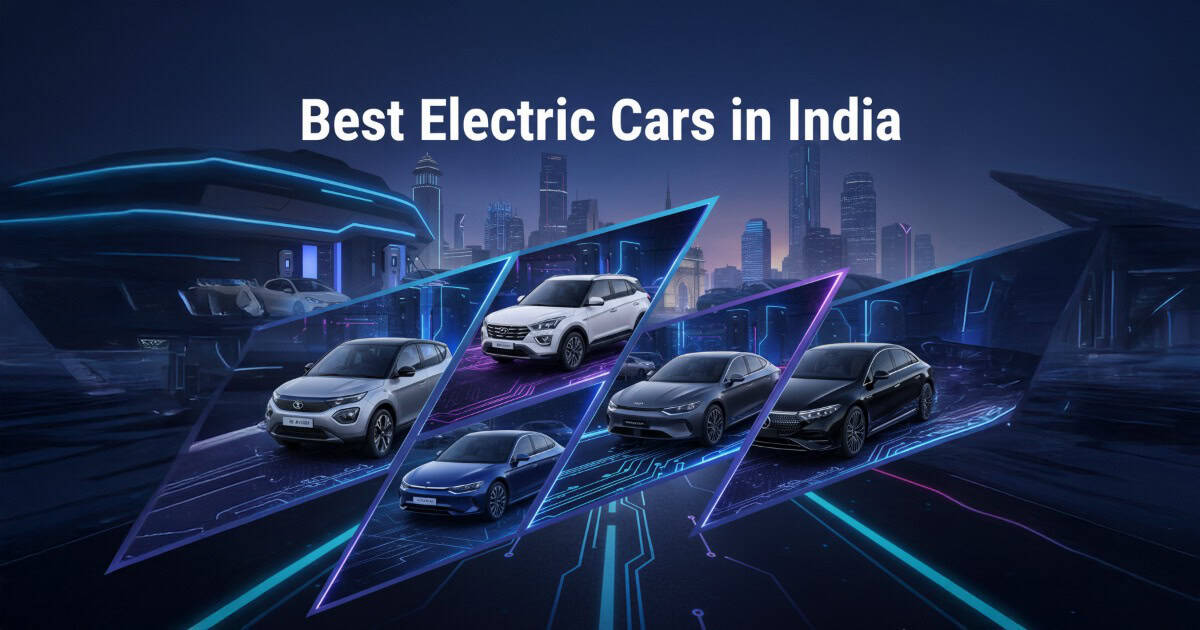
The year 2025 marks a turning point for electric vehicles (EVs) in India. What was once a niche market, dominated by a handful of models like the Tata Nexon EV and MG ZS EV, has now exploded into one of the fastest-growing automotive segments in the country.
Government incentives, the global shift to clean mobility, and rapid advancements in battery technology, charging infrastructure, and manufacturing have made EVs more accessible and practical for Indian buyers.
According to the Society of Indian Automobile Manufacturers (SIAM), EV adoption in India is expected to cross 2 million units by the end of 2025, a record milestone driven by the entry of new players like VinFast, BYD, and Rivian, alongside established giants like Tata, Hyundai, Mahindra, Maruti Suzuki, and Kia.
But with so many EV options available in 2025, buyers are often confused:
This guide answers all those questions. We’ve compiled the Top 15 Best Electric Cars in India 2025, covering price, range, features, and buyer suitability. Whether you’re a first-time EV buyer or a luxury car enthusiast, this list will help you make the right choice.
Several factors make 2025 a special year for EV adoption in India:
In 2020, charging stations were scarce. By mid-2025, India has over 12,000 public EV charging stations, with networks led by:
Highways like Delhi–Mumbai Expressway and Chennai–Bengaluru corridor now feature fast-charging hubs every 100 km, enabling long-distance EV travel.
Unlike earlier years where buyers had only 2–3 serious EV options, 2025 offers more than 25 EV models across all price segments:
With petrol hovering around ₹110/litre in metro cities, EVs have become 10x cheaper per km to operate. Combined with India’s growing climate consciousness, more families are choosing electric mobility.
Here’s how the Indian EV landscape looks in 2025:
| Segment | Popular EV Models | Price Range (₹) | Target Buyers | Key Highlights |
|---|---|---|---|---|
| Budget (₹7–15 lakh) | Tata Punch EV, MG Comet EV, Citroën eC3 | ₹7.5 – 15 lakh | First-time buyers, city commuters | Affordable, compact, practical for city driving with basic charging solutions. |
| Mid-range (₹15–30 lakh) | Tata Nexon EV facelift, Hyundai Creta EV, Tata Curvv EV, Maruti eVX | ₹15 – 30 lakh | Families, daily users | Balanced range (400–500 km), SUV practicality, best value for most buyers. |
| Premium (₹30–60 lakh) | Kia EV9, BYD Seal, MG ZS EV, VinFast VF7 | ₹30 – 60 lakh | Professionals, premium buyers | Long range (500+ km), advanced tech, larger family cars, stylish design. |
| Luxury (₹60 lakh+) | Mercedes EQS SUV, BMW iX, Rivian R1S, MG Cyberster | ₹60 lakh – 1.5 crore+ | Enthusiasts, luxury segment | Flagship EVs, ultra-luxury features, 600–700 km range, sports & adventure EVs. |
This diverse lineup ensures there’s an EV for every type of buyer—from budget-conscious commuters to luxury enthusiasts.
In this blog, we’ll cover:
By the end, you’ll know exactly which EV fits your lifestyle and budget in 2025.
The MG Comet EV is the smallest and most affordable electric car in India today, making it an ideal choice for city commuters and first-time EV buyers. Despite its compact size, it’s surprisingly feature-packed.
Quick Specs
| Feature | Details |
|---|---|
| Price (ex-showroom) | ₹7.5 – 9.5 lakh |
| Range | 230 km (ARAI certified) |
| Battery | 17.3 kWh |
| Charging | 7 hours (AC home charger), no DC fast charge |
| Body Type | Compact hatchback |
Why It Stands Out
Pros:
✔️ Most affordable EV in India
✔️ Compact & easy to drive in cities
✔️ Stylish, premium cabin feel
Cons:
❌ Not suitable for highway trips
❌ No DC fast-charging option
The Citroën ëC3 is a slightly bigger budget EV than the MG Comet, offering more space, practicality, and better range. It’s targeted at small families who want an affordable electric hatchback.
Quick Specs
| Feature | Details |
|---|---|
| Price (ex-showroom) | ₹12 – 14 lakh |
| Range | 320 km |
| Battery | 29.2 kWh |
| Charging | 10 hours AC, 57 min DC (10–80%) |
| Body Type | Hatchback |
Why It Stands Out
Pros:
✔️ Spacious compared to Comet
✔️ Decent range for daily driving
✔️ Strong French design DNA
Cons:
❌ No fast-charging as quick as rivals
❌ Limited brand recognition in India
The Tata Punch EV, launched in early 2025, is positioned as India’s most affordable electric SUV. It’s built on Tata’s new Gen 2 EV platform, offering better efficiency and modern tech.
Quick Specs
| Feature | Details |
|---|---|
| Price (ex-showroom) | ₹11 – 15 lakh |
| Range | 300–350 km |
| Battery | 25–35 kWh options |
| Charging | 50 kW DC fast-charging |
| Body Type | Micro SUV |
Why It Stands Out
Pros:
✔️ Affordable SUV-style EV
✔️ Tata’s trusted EV platform
✔️ Multiple battery options
Cons:
❌ Not as spacious as Nexon EV
❌ Entry-level versions have limited range
Vietnamese brand VinFast made its Indian debut in 2025 with the VF6 and VF7. The VF6 is the smaller, more affordable model, positioned against Tata Nexon EV and Hyundai Creta EV.
Quick Specs
| Feature | Details |
|---|---|
| Price (expected) | ₹20 – 25 lakh |
| Range | 350–400 km |
| Battery | 59 kWh |
| Charging | 35 min (DC fast charge) |
| Body Type | Compact SUV |
Why It Stands Out
Pros:
✔️ New global brand with bold entry
✔️ Strong feature list
✔️ Decent range for India roads
Cons:
❌ Unknown brand trust factor
❌ Limited service network initially
The Maruti Suzuki eVX (expected launch in late 2025) is one of the most anticipated EVs. As Maruti’s first mainstream electric SUV, it’s designed to compete directly with Tata Nexon EV and Hyundai Creta EV.
Quick Specs
| Feature | Details |
|---|---|
| Price (expected) | ₹18 – 22 lakh |
| Range | 450–500 km |
| Battery | 60 kWh |
| Charging | 30 min DC fast charge |
| Body Type | SUV |
Why It Stands Out
Pros:
✔️ Maruti’s service network across India
✔️ Long range at affordable price
✔️ Built for Indian conditions
Cons:
❌ Launch is late 2025, might face delays
❌ Unknown real-world efficiency
The MG ZS EV, one of the earliest EVs in India, has been refreshed in 2025 with better range, updated interiors, and improved charging speeds. It sits in the ₹20–30 lakh premium EV bracket.
Quick Specs
| Feature | Details |
|---|---|
| Price (ex-showroom) | ₹22 – 28 lakh |
| Range | 450–500 km |
| Battery | 51–72 kWh options |
| Charging | 40 min DC fast charge |
| Body Type | SUV |
Why It Stands Out
Pros:
✔️ Established EV in India
✔️ Practical SUV for families
✔️ Good charging speed
Cons:
❌ Price creeping upwards
❌ Faces stronger competition in 2025
Tata has been leading the EV revolution in India, and the Curvv EV is its boldest design yet. Positioned above the Nexon EV, this electric crossover offers futuristic styling and longer range.
Quick Specs
| Feature | Details |
|---|---|
| Price (expected) | ₹17 – 22 lakh |
| Range | 400–450 km |
| Battery | 45–55 kWh |
| Charging | 35–40 min DC fast charge |
| Body Type | Crossover SUV |
Why It Stands Out
Pros:
✔️ Futuristic design
✔️ Long range in mid-price bracket
✔️ Tata’s reliability & after-sales
Cons:
❌ Launch expected mid-2025, still upcoming
❌ Faces heavy competition from Creta EV
Chinese giant BYD has made waves in India with its e6 and Atto 3. In 2025, it brings the BYD Seal, a sporty electric sedan with performance comparable to Tesla Model 3.
Quick Specs
| Feature | Details |
|---|---|
| Price (expected) | ₹35 – 40 lakh |
| Range | 570 km (global WLTP) |
| Battery | 82 kWh Blade Battery |
| Charging | 30 min DC fast charge |
| Body Type | Sedan |
Why It Stands Out
Pros:
✔️ Longest range in sub-₹40L EVs
✔️ Advanced battery safety
✔️ Premium interiors
Cons:
❌ Expensive compared to Tata/Hyundai
❌ Limited brand trust in India
The Hyundai Creta EV launched in mid-2025 and instantly became one of the most awaited family EVs. Built on the success of the Creta petrol/diesel, this EV variant promises to dominate its segment.
Quick Specs
| Feature | Details |
|---|---|
| Price (expected) | ₹18 – 25 lakh |
| Range | 400–450 km |
| Battery | 45–60 kWh |
| Charging | 35 min DC fast charge |
| Body Type | SUV |
Why It Stands Out
Pros:
✔️ Familiar Creta appeal in EV form
✔️ Spacious family SUV
✔️ Balanced price vs features
Cons:
❌ Faces stiff competition from Nexon & eVX
❌ Slightly premium pricing
Mahindra has committed heavily to EVs, and the BE.6 is one of its most anticipated 2025 launches. With futuristic styling and a robust battery, it’s a direct rival to Tata Curvv and Creta EV.
Quick Specs
| Feature | Details |
|---|---|
| Price (expected) | ₹20 – 25 lakh |
| Range | 450–500 km |
| Battery | 60 kWh |
| Charging | 35 min DC fast charge |
| Body Type | SUV |
Why It Stands Out
Pros:
✔️ Long range at a competitive price
✔️ Stylish design
✔️ Indian brand with growing EV focus
Cons:
❌ Yet to prove real-world efficiency
❌ Launch expected late 2025
The Kia EV9 is a game-changer in India, offering a 7-seater electric SUV for families. It brings luxury, practicality, and strong range, but at a premium price.
Quick Specs
| Feature | Details |
|---|---|
| Price (expected) | ₹55 – 65 lakh |
| Range | 500–540 km |
| Battery | 99.8 kWh |
| Charging | 20 min (ultra-fast 800V) |
| Body Type | 3-row SUV |
Why It Stands Out
Pros:
✔️ Perfect for large Indian families
✔️ Global premium SUV standard
✔️ Strong range & charging speed
Cons:
❌ Very expensive
❌ Limited buyer base due to pricing
The MG Cyberster is the most unique EV in this list — a 2-seater electric sports car. Expected launch in late 2025, it’s targeted at enthusiasts looking for something beyond family cars.
Quick Specs
| Feature | Details |
|---|---|
| Price (expected) | ₹45 – 55 lakh |
| Range | 500 km |
| Battery | 77 kWh |
| Charging | 35 min fast charge |
| Body Type | Roadster (2-seater) |
Why It Stands Out
Pros:
✔️ Sporty, stylish design
✔️ Long range for a sports EV
✔️ Unique offering in Indian market
Cons:
❌ Niche product, not for families
❌ Expensive
The Tata Nexon EV has been India’s EV bestseller for years, and the 2025 facelift makes it even stronger. With improved range, fast charging, and refreshed interiors, it remains the go-to EV for most Indian buyers.
Quick Specs
| Feature | Details |
|---|---|
| Price (ex-showroom) | ₹14 – 20 lakh |
| Range | 450–500 km |
| Battery | 40–50 kWh |
| Charging | 35 min DC fast charge |
| Body Type | SUV |
Why It Stands Out
Pros:
✔️ Affordable yet feature-rich
✔️ Longest range under ₹20 lakh
✔️ Strong resale value
Cons:
❌ Too common, lacks uniqueness
❌ Still not as premium as Hyundai/Kia rivals
The Mercedes EQS SUV represents ultimate EV luxury in India. With a massive 700 km WLTP range and premium comfort, it’s the choice for India’s elite EV buyers.
Quick Specs
| Feature | Details |
|---|---|
| Price (ex-showroom) | ₹1.2 – 1.5 crore |
| Range | 650–700 km |
| Battery | 108 kWh |
| Charging | 30 min ultra-fast charging |
| Body Type | Luxury SUV |
Why It Stands Out
Pros:
✔️ Best-in-class range
✔️ Ultra-luxury interior
✔️ Smoothest EV ride in India
Cons:
❌ Very high price
❌ Limited buyer pool
Topping our list is the Rivian R1S, expected India entry in late 2025. Known globally as an adventure EV SUV, it combines luxury with off-road capability.
Quick Specs
| Feature | Details |
|---|---|
| Price (expected) | ₹1 – 1.2 crore |
| Range | 550–600 km |
| Battery | 135 kWh |
| Charging | 40 min DC fast charge |
| Body Type | Adventure SUV |
Why It Stands Out
Pros:
✔️ Luxury + rugged capability
✔️ Long range SUV
✔️ Fresh global brand in India
Cons:
❌ Expensive
❌ Limited service initially in India
Here’s a quick look at how the Top 15 EVs compare in India by price and range:
| EV Model | Price (₹, ex-showroom) | Range (km) | Battery (kWh) | Charging (DC fast) |
|---|---|---|---|---|
| MG Comet EV | 7.5 – 9.5 lakh | 230 | 17.3 | No DC fast |
| Citroën ëC3 | 12 – 14 lakh | 320 | 29.2 | 57 min (10–80%) |
| Tata Punch EV | 11 – 15 lakh | 300–350 | 25–35 | 50 kW (35–40 min) |
| VinFast VF6 | 20 – 25 lakh | 350–400 | 59 | 35 min |
| Maruti eVX | 18 – 22 lakh | 450–500 | 60 | 30 min |
| MG ZS EV 2025 | 22 – 28 lakh | 450–500 | 51–72 | 40 min |
| Tata Curvv EV | 17 – 22 lakh | 400–450 | 45–55 | 35–40 min |
| BYD Seal | 35 – 40 lakh | 570 | 82 | 30 min |
| Hyundai Creta EV | 18 – 25 lakh | 400–450 | 45–60 | 35 min |
| Mahindra BE.6 | 20 – 25 lakh | 450–500 | 60 | 35 min |
| Kia EV9 | 55 – 65 lakh | 500–540 | 99.8 | 20 min (800V) |
| MG Cyberster | 45 – 55 lakh | 500 | 77 | 35 min |
| Tata Nexon EV 2025 | 14 – 20 lakh | 450–500 | 40–50 | 35 min |
| Mercedes EQS SUV | 1.2 – 1.5 crore | 650–700 | 108 | 30 min |
| Rivian R1S | 1 – 1.2 crore | 550–600 | 135 | 40 min |
To make it easier, here are the best EV recommendations by buyer type in India 2025:
One of the biggest barriers to EV adoption in India has been charging. But 2025 has seen a massive boost:
👉 By 2030, India targets 1 million EV chargers nationwide, meaning the EV revolution is only just beginning.
The EV landscape in India 2025 is more exciting than ever before. From budget hatchbacks like the MG Comet EV, to family-friendly SUVs like the Hyundai Creta EV, and luxury flagships like the Mercedes EQS, there is an EV for every Indian buyer.
If 2024 was the year of early EV adoption, then 2025 is the year EVs go mainstream in India.
The choice is no longer “Should I buy an EV?”
It’s now “Which EV should I buy?” 🚘⚡
👉 The MG Comet EV, starting at ₹7.5 lakh, is the most affordable EV in India right now.
👉 The Mercedes EQS SUV offers the longest range at 650–700 km per charge. Among affordable EVs, the BYD Seal delivers 570 km range under ₹40 lakh.
👉 The Tata Nexon EV 2025 facelift is the best choice under ₹20 lakh, with up to 500 km range and Tata’s service network.
👉 Yes. In 2025, India has over 12,000+ public charging stations with fast-charging hubs along major highways. Home charging remains the most convenient option.
👉 If you want affordability and proven success, go with Tata Nexon EV. If you prefer a more premium, spacious SUV, the Hyundai Creta EV is a stronger family choice.
👉 Absolutely. EVs cost ₹1.2–1.5 per km, compared to petrol’s ₹8–10 per km, making them nearly 8–10x cheaper to run.
Prices and features mentioned are accurate as of the date of publication. Always check the official provider website for the most current pricing and availability.